Investors eye postage stamps

The postage stamp market was very hot before the 1997 Asian financial crisis and now it's heating up again. Experts advise what to watch for. Wang Jie describes the issue.

It's tantalizing to think that among those boxes of dusty old family papers and letters there might be a small fortune - a tiny, long-forgotten postage stamp.

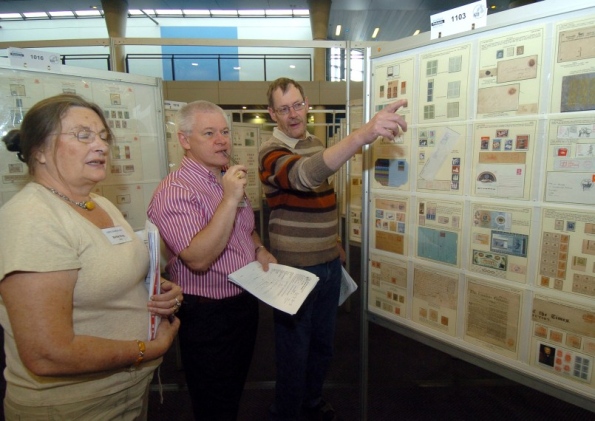
Collectors crowd at a stamp show in Shanghai as the stamp market is heating up again

The Chinese postage stamp auction market has recently heated up again, but experts warn what's in the attic probably isn't worth very much. Unless it's from the "cultural revolution" period (1966-76) or the Qing Dynasty (1644-1911). Significance, rarity and condition determine value.

Thirteen years ago in 1997, the postage stamp market in China was booming, and several stamp exchange markets emerged. But then the 1997 Asian financial crisis canceled hopes of a new age of profitable stamp collecting.

But in the last couple of years, long-forgotten objects such as coins, chops, ancient mirrors and old Moutai spirit have been bringing in money.

Rare postage stamps too are selling and collectors hope the enthusiasm lasts.

In 2009, one stamp titled "All the Landscape of the Country is Red," issued during the "cultural revolution," was auctioned for HK$3.68 million (US$472,845 today) in Hong Kong.

It originally sold for - 0.08 yuan at the time, about 1 US cent. That set a record for "cultural revolution" postage stamps.

A year later, another stamp issued during the "cultural revolution" broke the record and sold for HK$6.67 million.

Starting in 2010, the postage stamp market has become very, very hot.

"Don't be too optimistic," says a veteran postage stamp investor, declining to be quoted by name. "From years of experience, I understand the nature of stamp collecting."

One of his friends used to be called "the big brother and winner" in the stamp collecting arena when it boomed in 1997. "But he lost badly. Guess what he's doing now? Selling lottery tickets."

What accounts for the recent increase in auction prices?

"Take a careful look," says the investor. "It's only the stamps issued in early periods or the 'cultural revolution' that sell for high figures, since rarity always decides the value."

According to him, the daunting inflation rate has pushed the market up, encouraging ordinary people to invest.

"I often blame my parents for not collecting those old things years ago," says Wu Wei, a 35-year-old professional. "Back then, the prices of everything were reasonable and affordable. But the best time is gone."

Fortunately, he found a set of fabled zodiac golden monkey stamps issued in February 1980. "I'm going to sell if the price keeps rising," says Wu.

China issued 5 million Monkey stamps to commemorate the Year of the Monkey on the Chinese lunar calendar.

They are not that rare but they are familiar to many people and are considered a weather vane in the stamp market.

In 1997, a single monkey stamp sold for 1,800 yuan (US$278). In 2010 a single stamp sold for 11,700 yuan.

Early this year a whole set of stamps, 80 individual stamps, was auctioned for 1.1 million yuan.

That might explain why many Chinese people stand in long queues to purchase special edition zodiac animal stamps during the Chinese lunar new year. Every year, new stamps are issued.

The 1980 monkey stamp, and by extension similar zodiac stamps, are rooted in the minds of many Chinese people as an investment - accessible and affordable.

For example, the price of the dragon stamp issued in 2000 has increased 30 times in value; the rabbit stamp from 1999 has increased five times; last year's tiger stamp has almost tripled in value, according to collectors.

"If you look at its original face value, then a 30-fold increase is no big deal. I don't think much of those stamps, especially those issued after 1990," says Ji Chongjian, the owner of Shanghai Chongyuan Auction House. "The huge circulation and the boring subject are the reasons. Some stamps have a circulation of 10 or 20 billion, I really don't see any investment value there."

Of course, special limited-edition stamps, especially canceled ones, are a different story.

Ji suggests ordinary people should not get excited about stamp collecting.

"If it's your hobby, it's okay," he says. "But be wary of treating it as an investment."

According to him, there are only two stamp categories with investment potential, those issued during the Qing Dynasty and those issued during the "cultural revolution."

The 100 single stamps issued to mark the ascent to the throne of Pu Yi (1908-1912), China's last emperor, have been valued at 100,000 yuan each.

The rarity of the stamps issued during the "cultural revolution" make them valuable.

The message in all this: The postage stamp market and the flow of capital are not easy to figure out and there's considerable uncertainty.

source

Two penny blue bought for £29,000 sells for £1m at auction

The elusive 'Post Office Mauritius' two penny blue stamp fetched just over £1 million to become the most valuable ever sold in the UK.

The rare 'Post Office Mauritius' stamps sold for £1 million at auction in London

An unidentified telephone bidder beat off competition from six would-be buyers in the crowded sales room to pay twice as much as expected for one of the world's most famous stamps at Spink Auctioneers, London.

The stamp was one of the highlights of the Chartwell collection formed by businessman and philanthropist Sir Cyril Humphrey Cripps, expected to fetch more than £20million in nine sales over 18 months.

Collectors from around the world have descended on the auction house to bid for stamps currently held in 80 albums.

Another rarity going under the hammer is the finest known 'penny black', dating from the beginning of the Post Office in 1840.

It is expected to fetch between £150,000 and £200,000.

Auction house chairman Olivier Stocker said: 'The Chartwell Collection is, without a shadow of a doubt, one of the biggest ''wow'' moments we have ever experienced.

'When the collection arrived in London it was amazing to watch as our specialists turned the pages of what may be one of the finest philatelic collections of our time to reveal treasure after treasure.'

Sir Humphrey was a passionate collector all his life. After his death in 2000, his children found a shoebox in the back of his wardrobe containing thousands of train tickets.

He had kept the ticket from every journey he had ever made.

Sir Humphrey began collecting stamps in the 1950s, encouraged by his son Robert, who had inherited a stamp album from an uncle.

source

Stanley Gibbons looks to put its stamp on the world

For stamps and autograph expert Stanley Gibbons (LON:SGI), 2011 is shaping up to be the year it truly begins to capitalise on its global brand thanks to a much more powerful online presence, growing interest in its offerings, most notably in China, and renewed focus on its core business, high quality collectibles.


Certainly there is considerable scope for expansion for the company worldwide: Despite its leading brand status, the company still has only 0.4% of a global market worth $10 billion per annum, according the international organisation for postal sector players, the Universal Postal Union. The body also estimates there are an estimated 60 million stamp collectors worldwide, of which 20 million are in China.

The long term, sustained growth in philatelic investment, furthermore, suggests stamps will remain an attractive alternative asset class going forward, further supporting the company’s prospects.

While Stanley has been mulling and planning its online strategy for several years, it is only now that it is coming to full fruition. There are good reasons for the slow pace, with chief executive Michael Hall pointing to too much emphasis on the company’s investment arm as a significant drag: “We focussed too much on short term opportunities to grow our investment and, perhaps, lost sight a little of our core objectives, core markets, core strengths.”

But there are other very good reasons for the delay in getting the online strategy up to speed. Not least among them is the sheer volume of work involved in creating databases for over 30 stamp catalogues, and comprising 1000s of pages has been enormously time consuming. Hall cites as an example Stanley’s “Stamps of The World’ catalogue, which stretches over 6,000 pages and features over a million stamps.

The time and effort should all be worthwhile though over the long term. The company’s retail website, launched last month should, for instance, enable the company to significantly boost earnings from its substantial holdings of lower value stamps. Previously those stamps, totalling over 400,000, were only available to purchase through visiting its retail premises on the Strand in London.

It is way too early to assess fully the performance of the retail site but Hall assures that its functionality is proving to be fine; with user feedback so far indicating just small tweaks are needed.

The retail site will be followed up, in the second half, with the launch of a trading platform. Similar in concept to trading on sites like eBay, it will allow stamp dealers and individuals to trade or auction their stock on a Stanley Gibbons platform.

The trading platform should generate new income streams for Stanley, including commission income and product authentication fees. There will also be a subscription stream thanks to its “innovative” online stamp collection tool and the site will boast access to online ‘real time’ pricing data for stamps too.

While the authentication service is not an obligation, sellers risk being kicked off on poor ratings – just as on Amazon and eBay.

Of its competitors in the online trading space eBay and Delcampe Auctions stand out but Stanley’s heavyweight brand status should help it, over time, become the default focus for online stamp trading worldwide, especially at the higher end of the market. As Hall stresses, the company only trades in catalogue quality product: “With us, you know you are going to get top quality.”

Turning to market penetration, China, home already to a third of philatelic collectors worldwide, and interest there continuing to grow fast, clearly represents a big opportunity for Stanley.

Already, with very minimal marketing to date, Stanley has managed to notch up sales last year £900,000. But the company is treading carefully: “What we are doing at the moment with China is building knowledge and presence. Hong Kong is particularly important in this respect – more dealers in China buy in Hong Kong than on the mainland.”

The Chinese are particularly keen on British stamps – items like the penny black and tuppeny blue, for instance are a big hit.

A good illustration of the fantastic growth in the China stamp market is the performance “1980 Year of the Monkey 8f”, the most famous stamp from China. It is, says Hall, the Penny Black of China - everyone there knows the stamp, reveres it and wants to own one.

In November 2006, Monkey 8fs were selling for £275 each on average. Today, they can sell at auction for £1,300, an increase of 373%.

Not surprising then that Stanley is also buying rare Chinese stamps to sell on. Hall explains that with stamp collecting having been illegal under former Chinese leader Mao Zedong, since his death in 1976 there has been an explosion in collecting. “A lot of Chinese stamps went overseas during the period when collecting was illegal but there is great interest there in repatriation.”

Hall believes the company has much to offer collectors and traders of Chinese stamps, both inside and outside the country as many westerners are also buying Chinese stamps as a means of diversifying and buying into China.

He adds: “Our perception at the moment is that the Chinese themselves do not differentiate on quality whereas we only buy top quality. Indeed we are buying top quality at the same price as the Chinese are paying for poor quality.”

There are growing concerns that the Chinese stamp market is now a bubble but Hall disagrees. “I think the term "bubble" is widely misused by financial commentators when referring to anything that represents a high growth market. There is validity in the concept though, that things can't go up at such high rates forever...

“My view is that, sure, the Chinese stamp market will become a bubble eventually but at the moment it is just a fast growing market supported by huge and rising demand against severe supply restrictions.” And Stanley is keen to ride it while the going is good.

The appetite of the Chinese for stamps is impressive, with Hall pointing out he has personally been to auctions in Hong Kong, for instance, where more than a dozen people will still be bidding for product over £100,000. By comparison, in the UK, he has never come across more than two or three bidders when prices rise above £100,000.

While the online ventures and growing demand overall augur well for the stamp side of its business, the company is also keen to move into other collectibles, niches that have similar characteristics to the world of stamps.

“We are definitely planning to diversify more into the collectibles universe in general. They are and will be extremely carefully chosen, however, not just in terms of product but the kind of partnerships we can forge with companies operating in the areas of interest to us. Quality in all respects is key.”

In recent months the company has added rare coins and war medals to its range of currently core stamps and autograph offerings. Other collectibles of growing interest to the group include historical documents and antique watches.

“We are very much focused on the long-term and not interested in chasing short term targets, that has to be the foundation for Stanley. But yes, it would be fair to say we feel very much that we are in the process of going through a step change in our development’.

Hall’s confidence about the company’s strategy and prospects is certainly backed up by recent trading. An update in April revealed it had made a strong start to its new year, with first quarter underlying revenues ahead 24%.

With the company having begun the year with high level of product, analysts are anticipating a healthy increase in sales over the current year.

House broker Peel Hunt is upbeat on Stanley Gibbons highlighting in recent research significant growth opportunities for the company through the internet sites, growth in emerging markets and in other collectibles.

It believes growing global interest should ensure that stamps continue to be an attractive alternative asset class, with “the strength of the brand providing a key competitive advantage”.

The broker estimates the asset value for Stanley Gibbons at £45.5m or 181p per share, including its stamps and memorabilia at market value rather than book value, underlining its confidence in the stock and prospects for the company.

Peel Hunt rates the stock a ‘buy’ with a price target of 215p.

Stanley Gibbons shares opened this morning on 184p.

source

Oregon artist to create stamp of personal favorite Mark Twain

COLUMBIA — Never in Greg Manchess’ wildest dreams did he think he would one day be chosen as the artist for a stamp honoring one of his all-time favorite subjects: Mark Twain.

“His face is so distinctive; I could even draw it in my sleep,” said Manchess, a self-taught artist from Portland, Ore.

Mark Twain's face, a riverboat, foliage and typography were key elements for Manchess as he designed this stamp.

The Twain stamp is the 27th installment in the U.S. Postal Service's Literary Arts series honoring famous American authors. Twain, whose given name was Samuel Clemens, is the author of American literary works such as “The Adventures of Huckleberry Finn,” “The Prince and the Pauper” and “The Adventures of Tom Sawyer.”

This will be the fifth Mark Twain stamp available from the Postal Service. The first came out in 1940 in the Famous Americans series. In 1972, the Postal Service released Norman Rockwell’s rendition of a scene titled “Tom Sawyer Whitewashing the Fence.”

The third stamp came out in 1985, commemorating the return of Halley’s comet and its unusual connection with Twain, as it appeared in both his birth year, 1835, and his year of death, 1910.

The fourth stamp, released in 1993 as part of the Postal Service's Classic Books series, featured an illustration from “The Adventures of Huckleberry Finn.”

As a child, Manchess always enjoyed Twain’s books. His fascination with Twain grew in art school, where he painted portraits and did a sculpted head study of Twain.

Little did Manchess know that one day the Postal Service would come knocking on his door asking him to paint the newest Mark Twain stamp, which will be a 44-cent commemorative first-class Forever Stamp.

“We got to talking, and (they) asked if I was ever interested in doing stamps, Manchess said. "And I said, ‘Are you kidding me? I would love to!’”

With 34 years of experience as a professional artist and illustrator, Manchess’s distinct style of thick brush strokes with oil paint earned him national recognition. His has collaborated with Paramount Pictures, Columbia Pictures and Disney to create movie posters and conceptual work for "The Chronicles of Narnia" series.

Manchess's fondness of history is exhibited in his book covers, magazine spreads and murals for a variety of clients such as Time magazine, National Geographic magazine and the Smithsonian.

“Greg has a marvelous reputation for his art,” said Phil Jordan, who has been an art director and stamp designer with the Postal Service since 1991. Jordan managed the entire Twain stamp project, and he hired Manchess.

Manchess said designing a stamp can be tricky.

“There is always a challenge with the format of a painting,” Manchess said. “For instance, going from a semi-size mural to a book cover to a stamp sounds like a problem.”

The key, he said, is to start with a small design then work upward so that everything in the picture balances out.

“Whenever I’m doing a painting, I start with a small thumbnail, usually the size of a — coincidentally — stamp,” Manchess said.

He said the real challenge was to get four key elements in the finished product: Twain’s head, a riverboat, foliage and the typography.

“The type is important, so there is no way around that,” he said. Jordan dictated the typography.

The real trick with the stamp was to be able to design it without losing too much of Manchess’ signature style of thick, expressive brush strokes.

“It had to be small enough but large enough to see,” he said “so I had to downsize my brushes.”

The original painting of the stamp is only 6 inches across, and it was inspired by a 1907 photograph of Twain. Jordan went through many photographs and pictures of the writer and picked those that were most recognizable and that would exude a classic sense of American illustration. Manchess got the last say on which photograph to use.

“It was an old black-and-white shot,” Manchess said. “But the lighting was nice, so I added the color and made up the skin tone and all that stuff.”

Denny Donnell, 76, is an avid stamp collector and a member of the Columbia Philatelic Society. He enjoys collecting stamps that are issued in Missouri.

A first-day-of-issue ceremony for the Twain stamp will be held Saturday in Hannibal, where Twain grew up. Donnell said some serious collectors will have the stamps placed on special cachet envelopes.

“Some people will carry them over to Florida, Missouri, the birthplace of Mark Twain, and get them canceled over there,” Donnell said.

The stamp will be available for sale in Columbia on Monday, said Cheryl Hudson of the local post office.

Donnell said he always is happy to see another Missouri stamp or a stamp related to a Missourian.

“As far as Missouri goes, he is one of the most famous authors, and he is well-known worldwide,” Donnell said.

Jordan said the commemorative stamp will appeal to most of the general public, especially those who are interested in literary history.

“Mark Twain remains one of the most respectable and readable authors in American history,” he said.

source

The world on paper

Stamp collecting (also known as philately) remains one of the most popular hobbies in the world, and still largely affordable if one chooses to stay away from the truly scarce material.

One of the reasons perhaps is the overall availability of stamps. They come on envelopes in the mail. New releases can be picked up at the local post office. Social networking sites on the internet, such as Facebook, provide ample opportunities to trade stamps with foreign collectors.


At first, a new collector can be readily overwhelmed by the sheer numbers of stamps that have been released by various countries, starting with Great Britain who released the world’s first stamp in 1840, with the United States following suit in 1847.

Tools of the trade

The basic necessity for collecting stamps is an album. Without a means to properly organize and mount one’s stamps, it wouldn’t be a collection, but just a mess of stamps in a box.

There are albums available for almost any country, world albums, specialty albums, albums for covers (envelopes with stamps on them), or albums or binders for blank pages. A collector can even make his or her own album by simply buying a binder and hole-punching pages for it.

Albums can range in price for basic, beginner world albums for around $10, to advanced collector albums costing hundreds of dollars a set. If one is just beginning to collect stamps, start simple and start cheap.

Stamps are generally mounted using a gummed “hinge,” for used stamps. or a special mount for stamps that have never been used, to protect the gum. A pack of 1,000 hinges can generally be had for around $8 or less. Mounts are used to affix the stamp to the album page. Never glue a stamp to a page nor lick the gum to attach it as these will ruin the value of any stamp.

Several other inexpensive “tools” will also come in handy: tweezers, a magnifying glass, and envelopes to sort and store stamps in. With these, a new collector is good to go.

As the collector soon advances, other “tools” needed might include a perforation gauge (a means to count the numbers of perforations along the edges of the stamps where they are torn or cut apart from a sheet) and watermark fluid and tray (many countries use secret marks – or watermarks – to avert counterfeiting which can only been seen by using a watermark detector).

Sources of information are also a must in order to know what stamps a country issued and in what order they were released, as well as a means to attribute difficult to identify stamps. Generally, collectors use Scots Standard Catalog for all of the above purposes. They can be expensive. Also helpful for the beginner are any of the various basic guides to stamp collecting. Buy used copies or see if the local library has them.

Start simple - go ‘Topical’

There must be hundreds of thousands of different stamps in existence, with more being produced by one country or another almost every day. Accept that a complete collection of world stamps probably has never been achieved by anyone, mainly because there are several examples of which only one is known to exist.

Rather than become overwhelmed and frustrated from the get-go, many collectors start off by building a collection that may be more reasonably achievable, and the variants are endless. Themed collections are generally referred to as topical collections, because they are built around a specific topic.

Here are some examples: stamps bearing a given theme (cats, trains, ethnic heroes and heroines, sports, American Civil War-themed, stamps, Christmas, World Fairs-themed, etcetera); stamps produced during a given period (U.S. stamps of the 1930s, World War II era stamps, etcetera); and stamps demonstrating a certain type of production (embossed stamps that have been actually printed on an envelope, coil stamps developed for use in vending machines, imperforated stamps, straight edged stamps produced without the perforations along the sides, triangular stamps).

Also consider condition. Stamps that have never been used more often than not are gummed, and called mint in condition. They require special mounts, which are generally not expensive, to protect the gum. Stamps that have been cancelled are called used. Some collectors only collect used stamps because they have performed the task they were printed to do. Others collect only mint stamps because they are showier and tend to have more value in general.

Thrown in the mire are stamps called “cancelled to order,” or CTOs. These are stamps that are immediately cancelled as soon as a post office receives an order for them, and they are mainly produced only for collectors by countries who rely on hobby stamp sales to actually contribute money to their national budgets.

CTOs are usually cheap and can make for a truly showy collection, although some “purists” frown on them because many were never really printed with actual postal use in mind.

Whatever the new collector decides, it is his or her collection and he or she is in control. Set achievable goals and keep in mind this is supposed to be fun, not bank account busting.

Other resources

Rather than remain an island adrift in a sea of stamps, there are opportunities for most collectors to associate with others and learn more about the hobby, or to find other collectors to trade with.

In Gettysburg, there is the Blue and Gray Stamp Club, consisting of a mixed age group. The club meets on the third Monday of every month at 7:30 p.m. at Saint James Lutheran Church, 109 York St., Gettysburg (see “Blue and Gray Club still going strong,” right).

Schools sometimes have stamp clubs, and if none exist, start one.

For the internet savvy, social networking sites provide a chance to meet other collectors around the world ranging from beginners to advanced collectors themselves. Other groups have web sites, blogs or discussion boards. A search on the internet for “stamp clubs” or “stamp collectors” should provide an ample array of associations where a collector might consider becoming a member or frequent visitor.

Many collectors begin by subscribing to an approval service offered by stamp dealers. This service involves dealers mailing stamps in packets to a collector, who then select which ones he or she would like to keep, returning the unwanted ones with payment for those kept.

However, with the prices of stamps generally tumbling courtesy of the internet (as is the case with most collectibles), better prices are likely to be found on the web at on-line auction or store sites (such as ecrater.com). Albums and supplies can also be found in the same manner.

As far as online auctions, refrain from becoming frustrated at being outbid. Persistence can pay off and there will always be another lot posted like the one sought. This reporter kept dogging listings seeking to buy an 1860, 10 cent U.S. stamp depicting George Washington. After losing bid after bid, one night the writer nailed one for $3. Assessed value: $275.

No matter how new or advanced a collector is, two basic principles remain the same, control and focus. Always look for the best deal no matter how long it may seem to take, and stick to one’s collection objectives.

And have fun!

source

Government puts Rizal's journey in cyberspace

MANILA, Philippines - Internet users may soon trace the journeys of national hero Jose Rizal, 150 years after his birth.

Chairman Ivan John Uy of the Commission on Information and Communications Technology (CICT) said yesterday that in honor of Rizal’s birthday on June 19, they would come up with a “Google map” type of website showing the places he visited and the locations of statues and monuments erected in his honor in different countries.

Lawyer Ramoncita Reyes, a descendant of national hero Jose Rizal, stands next to a Rizal stamp exhibit launched by Philpost at the central post office in Manila yesterday

Once they have completed this project, people would become more familiar with Rizal, a national and international figure, Uy added.

Uy said with just a click of a computer mouse, visitors of the Google-type website would know the places that Rizal visited such as Germany, Spain, and Japan and the locations of his monuments and markers and the significance of these locations in the life of the national hero.

“Since the CICT is the technology arm of the government we’d like to bring Rizal to the 21st century mindset,” he said.

“To put him in virtual cyberspace… we have to capture the footprints that he left in the world by using technology.”

Uy spoke during yesterday’s launch of “Rizaliana Collection on Stamp Exhibit by Jorge Cuyugan and Philatelic Friends” at the Philippine Postal Corp. (Philpost) in Manila.

The stamps, dating as far as 1906, are the personal collection of Cuyugan.

Uy said many Filipinos today have forgotten Rizal and the sacrifices he had made for freedom and the motherland.

“As we celebrate the 150th anniversary of our national hero, we feel that we would bring him and the values that he represents to us, to create awareness, not just for our people, but worldwide on who Rizal was and what he fought for and what he symbolized,” he said.

“He is one of the very few national heroes who is recognized and honored in many parts of the world.”

The CICT would be working with the National Historic Commission of the Philippines (NHCP) for the content of the website.

Uy said while Rizal’s 150th birthday is on June 19, the website will carry information not only for the one-day event.

It will contain activities that would be laid out by the different agencies of government during the yearlong celebration.

“It is supposed to be a yearlong celebration, not just a day celebration,” he said.

“So let us commemorate it for the whole year... We would coordinate with the NHCP, we would provide our technical support and expertise there.”

Uy said they would also entertain ideas on how they could maximize the use of technology to “further immortalize our immortal national hero.”

He is also contemplating initiating a tie-up with international search engines such as Google, he added.

Uy said Google occasionally creates doodles on their logo to commemorate personalities or events in history.

“Next week I’m going to Singapore and I’m going to meet regional head of Google in the Asia Pacific Region, they actually invited me to speak before them, and I will bring that up,” he said.

Uy said while the proposal for Google to feature Rizal might not happen on June 19, it is possible that their request will be granted within 12 months.

A coffee table book on Rizal should be released to mark the occasion, Uy said.

Meanwhile, Philpost yesterday morning launched the Rizal stamp exhibit, using the collection of philatelic Cuyugan.

Cuyugan said he lent more than 100 different Philippine-issued stamps on Rizal to the Philpost for the exhibit.

“I could say that I am one of the very few lucky persons of the last two decades who started collecting Philippine stamps when most of the issues were still available and affordable and because of this, I was able to assemble an almost complete collection of Philippine stamps from our Spanish period up to the present,” he said.

The oldest stamp issued on display was dated 1906, regarded as among the first Rizal stamps. It was printed as part of the United States’ first regular stamp issues for the Philippine Islands.

At that time, the Rizal stamp appeared on the lowest denomination of 2 cents and was the only Filipino portrait in the set that featured famous American heroes.

There were 51,125,010 pieces of 1906 Rizal stamps that were printed.

Cuyugan said it was 20 years ago when he developed an interest to collect Rizal items particularly stamps, postcards, coins, posters and banknotes.

He would like to encourage today’s young Filipinos to develop a “nationalist hobby” by collecting Rizal items that are not heavy on the pocket, like stamps or coins.

“Kids nowadays spend more time in front of a computer, they play computer games to relax,” he said.

“But collecting these Rizal items can also be relaxing and it would be a learning experience for them.” Cuyugan has all Rizal stamps released by the Philippines except for three or four

issues that are rare and expensive. “The ones that I have are actually cheap. Two of them are worth P2,000 apiece, but for most of my collection the price range was between P50 to P7,” he said.

“As for the 1906 issued stamp, I think I bought it at P50 to P100.” However, he does not know the market value of his collection. The stamps were purchased from dealers, auction houses, while others were given to him by friends.

source

Otterly fine stamps by Edmund Chen

He is better known as an actor who has starred in many Chinese drama serials and even in Hollywood movie Street Fighter: The Legend Of Chun Li.

Now, Edmund Chen Zhicai can add "stamp designer" to his credentials.


Chen, who has a flair for art, was approached by SingPost more than a year ago to design a stamp series featuring the Oriental Small-Clawed Otter, which is native to Singapore. The endangered mammal has been spotted at Sungei Buloh Wetland Reserve, and on Pulau Ubin and Pulau Tekong.

In a SingPost event held at the Singapore Philatelic Museum yesterday, the actor told my paper that he spent about three months researching the mammal's habitats and behaviour before starting on the initial sketches. He spent a month sketching the otter, using pictures he found on the Internet as references. Those sketches were then vetted by experts.

Chen, who was appointed SingPost's first Official Stamp Ambassador, said he had to redo his sketches many times to get the details right and that left him "depressed".

Ms Patsie Tan, SingPost's assistant vice- president of corporate communications, said that the actor was commissioned to do the job because he "can help in the outreach to the young generation on the appreciation of the arts".

Chen said he started drawing when he was in primary school and contributed his works to a student magazine. He received more than one "prize" of $5 for his submissions and that helped him realise the "joy of drawing".

The Endangered Animal - Oriental Small-Clawed Otter stamp issue, which comes in a set of four stamps, will go on sale for $3.20 tomorrow.

In conjunction with the issue, a unique imperforated Collector's Sheet, which comes with a folder, will be released. The sketchings of the otters on the folder cover were done by Chen's 20-year-old son, Yixi. Of the 1,000 to be issued, 30 come with golden serialised numbers and will be sold for $168. The other 970 serialised sheets - which sell for $88 - are sold out, due to overwhelming response during the pre-order period.

All proceeds from the sale of the gold-numbered imperforated Collector's Sheet will go to SingPost's adopted charity, Food from the Heart.

The first-day cover will come stamped with a special Oriental Otter postmark designed by Chen's 11-year-old daughter, Yixin. All products in this stamp issue will go on sale tomorrow at all post offices and at the Singapore Philatelic Museum. Orders can also be made at SingPost's online portal, vPost.

source

Josephite’s Vatican stamp collection one of world’s best

Josephite Father Edward J. Mullowney was just a young lad when in 1929 the Vatican became a sovereign city state through the Lateran Treaty made between Pope Piux XI and Italy’s Fascist prime minister, Benito Mussolini.

His father, an avid U.S. stamp collector, encouraged his young son to begin collecting stamps from the Vatican.

Josephite Father Edward J. Mullowney peruses his extensive stamp collection. (Special to The Review/Christopher Gaul)

“My father said, ‘it’s a new country, and you can start from the beginning,’” the retired Josephite Father recalled as he showed a visitor his large, remarkable and rare Vatican stamp collection that includes elaborately stamped envelopes (“covers” in philatelic terms) posted by the Vatican and flown all over the world on German zeppelins beginning in 1930 and later by early passenger aircraft.

Among them is a stamped letter from the Vatican to the U.S. carried by the Hindenburg a year to the day the huge Zeppelin burned and crashed in Lakehurst, N.J., on May 6, 1937 with the loss of 36 passengers and crew.

Under the Vatican’s 1929 concordat with Italy, Vatican airmail was dispatched from Rome’s Ciampino Airport. This gave the Vatican post office access to the zeppelin flights, and Vatican mail was serviced on German zeppelins between May 1930 and September 1939. Father Mullowney’s collection contains at least one flown “cover” (envelope) from every zeppelin flight that carried Vatican mail, including examples of Vatican City single, double, and triple franking markings, with the stamps of Italy and Germany.

Impressive as those particular collections are, Father Mullowney, now a resident and former rector of the Josephite’s St. Joseph Manor retirement home in Baltimore has much more. For example he has all the German stamps from the 1866 establishment of the North German Federation to the end of Hitler’s Third Reich in 1945. And then there are the many picturesque Egyptian postage stamps issued up until the death of King Farouk in 1965. And that’s not to mention all the stamps of the German colonies prior to World War I.

But, his pride and joy are the Vatican stamps. Yet, while they are popular with collectors, only an intrepid few have sought out their forerunners, the postal emissions of the so-called Roman States.

Father Mullowney is one of the few, and has amassed what is considered to be one of the finest such collections in the world. He noted that these 150-year-old stamps have been neglected for too long in this country and that they represent a brand new area of expansion for those interested in Vatican stamps or in religious themes.

Philatelist extraordinaire, Father Mullowney is not about to give up collecting. He is always on the lookout for a new addition to his collection, and when he spots something that piques his interest he contacts his auction agent who bids on it for him.

“It’s been more than a life-long hobby, it’s been and still is a passion,” said Father Mullowney, who is a past president of the Baltimore Philatelic Society and serves on the expertise committee for the American Philatelic Society.

“You know,” he said, “there has been more literature written about stamp collecting than any other hobby. That should tell you something.”

source

The Smart Collector: Stamp collection proving a tough sell

Q: I want to find a good home for the stamp collection I started as a kid. I took it to a stamp show, but serious collectors didn't find it sophisticated enough for them. The guy at a local stamp retail shop suggested I use the stamps to mail bills.

Is stamp collecting no longer a popular hobby? Wouldn't a kid out there appreciate a boost to his collection?


A: Our reader adds that he'd like to "maybe make a few bucks" from selling.

With any collection, the truism is that as you build, tastes advance. Knowledge grows and wants escalate. The end result is that good enough is no longer enough. Something better is always out there. Of course, the items you crave are pricier and pricier. With stamps - as with coins, porcelains, dolls, watches and you name it - advanced collectors all chase after the same top, rare merchandise. That's why our reader can't get anywhere with his collection.

I do think the appeal of stamp collecting has faded for young collectors, for several reasons. For generations, the basic appeal was the romance of discovering faraway places through those little pieces of decorative paper. Each stamp told a story. But today's kids have the world available to them in so many electronic ways. Stamps seem fussy and abstract.

We polled a few young people to get their take on stamp collecting as a hobby. Admittedly, this is an unscientific sample. From an 11-year-old: "I, uh, would be interested a little bit." Already a collector of model cars, he is willing to learn about stamps.

A 14-year-old girl told us, "It sounds interesting, but stamps are not my thing. I was never really introduced to stamp collecting."

A 10-year-old was flat-out not interested. "It's just not my thing."

Adult stamp collectors have done a poor job of introducing the hobby to future collectors. Holding a show where established collectors all chase after high-level merchandise does not help the hobby.

Long ago, someone told me that the mean age of advanced collectors was "death." Any hobby peopled by an aging demographic with everyone chasing rare treasures can last only so long. The philatelic world is headed for trouble if it can't attract new blood.

Generally, beginning collectors start with less-rare stamps and move up as they learn more. Advanced collectors may sniff at the reader's collection, but it might make a great beginning for a youngster or neophyte.

Coin collectors have all sorts of press flaks and professional organizations that push their hobby. I don't see a lot of outreach in the stamp world. Bluntly put, stamp collecting today is just not sexy.

When we asked the youngsters in our poll if they'd look at a stamp collection provided their school had a display version, several were interested.

How about donating or lending the collection to a school or community library? I'll bet budding collectors would find it interesting. If sale is a must, there's always an online auction. Check eBay to see how similar collections are presented and priced.

Warning: There are sharks in any collecting area. Be smart about selling. Don't let buyers pick out the best and leave the rest - unless it benefits you to do so.

Q: My picture shows kissing salt and pepper shakers marked "Made in Occupied Japan." How do I find value?

A: To clue readers, "kissing" shakers nestle as a pair, so they appear to hug.

We found several varieties of your kissing cats in completed sales on eBay for $2 to $3. While vintage and relatively old, inexpensive ceramics made in Occupied Japan were poor quality when made. Produced by boatloads for export, they're still plentiful.

Perhaps your library has a price guide to OJ china or salt and pepper shakers.

Q: I've never seen anything like this bookcase. It's walnut and breaks down into pieces. Any info?

A: The large standing case with glass doors, four shelves and two drawers in the base is late Victorian and actually quite common. As seen in photos, this is a nicer example with open carving at the door tops.

It's called "brown furniture" by dealers, and most large pieces don't sell well at auction today. This better example could retail for $300 to $700.

AUCTION ACTION

Never before sold at auction, a 1932 original Mickey Mouse three-sheet poster brought $35,850 recently at Heritage Auctions. The poster, released by United Artists, dates from less than four years after Walt Disney created the cartoon mouse. Three-sheet movie posters are separate printed sheets that, when joined, form a 41-by-81-inch poster.

source

With the stamp of authority

Renowned stamp dealer and postcard collector Charles Lilley, who had the world's largest collection of Maori postcards, has died.

Charles Harry William Lilley, 81, owned The Stamp Shop in New Plymouth after buying it with his late wife Ruby more than 35 years ago. He also ran an online business, selling philatelic products ranging from coins and cigarette cards to postal history products and stamps.

Charles Lilley at work with some of his thousands of early 20th century Maori postcards, the largest collection in the world

Born in South London in 1929, Mr Lilley began collecting stamps as a child in the 1930s while his postcard collecting began in the 1950s.

He came to New Zealand in 1952 and married Ruby who died in 2003. The couple had three children Bryan, Spencer and Tanya as well as nine grandchildren.

Tanya Toa-Wairere worked with her father in the Stamp Shop for more than 10 years and said Mr Lilley loved meeting new people. "He would talk to them for hours," she said.

Along with daughter Rowena, they took over management of the shop and the online business when Mr Lilley had two heart attacks on the same day last November. He died at Telford Resthome this week.

Mr Lilley's hobby became a career about 35 years ago when he gave up his job at McKechnie Aluminium in Bell Block, where he worked for 23 years. He bought The Stamp Shop, telling the Taranaki Daily News in an interview last year that the move was a gamble, telling his wife "we could lose everything".

The move, ultimately a successful one, saw him making countless trips overseas. He would take out a stand at different shows, many of them in Asia and he visited the UK every year for 25 years, Mrs Toa-Wairere said.

"He had two sisters over there he would visit but he also enjoyed going to different places and buying more things for the business."

Many of the items in his private collection of Maori postcards were cards British tourists had bought in NZ and sent home.

"A lot of them he bought back here," Mrs Toa-Wairere said.

Of his thousands of other postcards, more than half featured pictures of South London. In all, he had about 80,000 postcards and estimated his stamp collection numbered in the millions. His total collection was worth upwards of $750,000.

Longtime customer and friend Paul Peters said he had known Mr Lilley since 1968.

"When he became a stamp dealer in the mid 1970s he always seemed to have the most elusive and unusual, like rare and genuine certified Romanian overprints on Hungarian stamps used in Transylvania at the end of World War I.

"I also remember going into his shop one day in 1991 – on a trip back home – and saying I was trying to get a fine, used copy of the five shilling King Edward VII of the Orange River Colony. I said `I am sure you won't have that'. He replied, `have a look in there', pointing to an old album. There it was."

source

Vail Daily columnnist: Jack R. Van Ens: Stamp-collector in chief

The world arrives at a stamp collector's doorstep. Stamps commemorate pivotal historic events. These bits of colorful paper depict people whose lives changed history for good or bad.

Couldn't U.S. presidents enormously benefit from stamp collecting? Franklin Delano Roosevelt did. FDR's mother, Sara, started collecting stamps at 5 years old while living in China. She first transferred the collection to her brother Fred. He gave it to Roosevelt on his 10th birthday in January 1892. FDR enjoyed this hobby, building his collection to over one million stamps housed in 150 matching volumes.

His physician, Admiral Ross McIntire, estimated that the president spent over 2,000 hours on his stamp collection during his 12 years in the White House.

What other presidents glean from this hobby might save them from serious blunders, especially when dealing with territories where tribes have roamed for centuries.

When Asian experts conversed with FDR during World War II about what South Pacific islands Allied forces should invade fighting the Japanese, they were amazed at FDR's command of geography. He pinpointed on maps obscure islands that few Americans recognized.

The president mastered this valuable knowledge largely from his devotion to stamp collecting. Stamps depict scenes within unfamiliar countries and open windows to their cultures.

No stranger to traveling in foreign lands, Prime Minister Winston Churchill visited Washington, D.C., in May 1943 for a conference named TRIDENT. He and President Roosevelt outlined various strategies for Allied troops after Sicily had been secured. Churchill and Roosevelt met at the presidential retreat called Shangri-La in Maryland's Catoctin Mountains, later renamed Camp David.

After intense conversations, Roosevelt excused himself in order to spend a few hours on his stamp collection before bedtime.

“I watched him with much interest and in silence for perhaps half an hour as he stuck them in, each in its proper place, and so forgot the cares of the state,” Churchill recounted.

When FDR sorted through stamps, it provided more than a passing diversion during pressure-packed days. This hobby helped deepen his friendship with Churchill.

The prime minister prided himself as a cosmopolitan traveler whose trips introduced him to the world's diversified cultures. He met a fellow traveler in Roosevelt whose crippled legs, ravaged by polio, kept him seated in a wheelchair. But stamp collecting allowed the president to travel the globe, without leaving his wheelchair.

Studying events that stamps commemorate helps collectors learn about a country's history and geography.

Roosevelt may have learned that Afghani officials in the 1870s wanted to stop citizens from reusing stamps by washing off cancellation marks. They clipped used stamps from envelopes, soaked them in water to separate paper adhering to the stamp. Then Afghans dipped the used stamp in a chemical soup that lightened the cancel. After drying and adding adhesive to the stamp's back, these folks mailed another letter with it affixed.

To stop such fraudulent re-use, Afghani officials in the late 19th century said that a stamp had to be ripped in half before the ragged portion was affixed to a letter. Such jagged stamps on covers prevented rampant re-use.

These 19th century Afghan covers featuring ripped stamps serve as an apt metaphor for the torn conditions U.S. soldiers encounter in Afghanistan today.

The British who colonized India long ago arbitrarily drew a border on primitive maps between what is now Pakistan and Afghanistan. But tribes that have lived in this rough territory for centuries ignore these artificial boundaries. Some tribal youth from Pakistan join the Taliban and fight across the border dividing both countries. When the battle doesn't go their way, they slip back over the border and melt into their tribal life before going to war again.

Collectors learn about such tribal customs from stamps. A culture in which loyalties are devoted to families and chieftains clutch power is the most difficult to convert into a fledgling democracy. These tribes have no historical experience of shared political power, necessary for growing a new democracy.

A middle class rarely emerges because tribes near the artificially imposed Afghani-Pakistan border shift from one camp to another. Families protect their warriors and hide them as civilians.

U.S. Defense Secretary Robert Gates admitted that the days for another swift and forceful counterinsurgency campaign, like in Iraq and Afghanistan, are over.

“In my opinion, any future defense secretary who advises the president to again send a big American land force into Asia or into the Middle East or Africa should ‘have his head examined,' as Gen. MacArthur so delicately put it,” declared Gates in a West Point speech.

Or perhaps cadets and presidents should emulate FDR and become stamp collectors. By studying history, geography and culture that stamps depict, a president will wisely shun military strikes in foreign lands that non-philatelists often misunderstand.

source

Show’s stamp of approval as king’s collection goes on display

Sheffield is the stamp collecting capital of the country this weekend – with 2,000 enthusiasts descending on the city for one of the biggest shows of the year.

Ponds Forge is the venue for the two- day event usually held in London – and which has attracted not only collectors and dealers from all over the UK, but from countries like Germany and South Africa too.


It’s all a celebratory feather in the cap for the Sheffield Philatelic Society, founded in 1894 and one of the oldest around, which has just held its 2,000th meeting.

“There are some outstanding rarities on show here – including a good deal of material that is unique,” said Donald Radley, a member of the organising committee who’s been pursuing his hobby for more than 70 years.

It’s one thing, for example, to have on display a Penny Black – the world’s first stamp, issued in 1840. But it’s quite another to see the original drafts of the iconic design, including rejected versions, works in progress and stamps from the first plates ever printed.

This is material from the famous collection assembled by George V – impossible to value as it will never be put on sale.

The Queen has given her personal permission for items from the royal treasure trove to make the journey north from their usual home at St James’s Palace, a once-in-a-lifetime chance to see them on show.

One of the visitors to the exhibition, which ends today, was John Susses from Pocklington near York, at 71 a collector for 55 years.

He said: “Stamp collectors do seem to be of a certain generation, but I think that has always been the case – it doesn’t mean it’s dying out.

“It’s a hobby a lot of people come to when they are in their 50s, I think it’s a nostalgic thing. And the hobby has also been given a boost by the increasing interest of people in their family backgrounds – stamps are a vital part of this country’s social history.”

source

Brooklyn sci-fi artist Donato Giancola puts his stamp on postage

Boerum Hill artist Donato Giancola has turned his obsession with outer space into a livelihood - illustrating the covers of hundreds of science fiction and fantasy novels.

Over the past two decades he has designed dozens of best-sellers, but his art entered a whole new universe today when the U.S. Postal Service released 60 million stamps bearing two of his cosmic paintings.

"I'm blown away. It's an honor to be a part of this," said Giancola, 44, a father of two who has lived and worked in his Pacific St. brownstone for 18 years.


Donato Giancola shows illustration for Alan Shepard stamp (below, with other stamp he created).

Two stamps designed by the local artist are being released today at post offices around the country.

One stamp bears a portrait of Alan Shepard, a NASA astronaut from New Hampshire who became the first American in space in 1961, and 10 years later visited the moon.

The other stamp shows NASA's Messenger spacecraft, which launched in 2004 and is currently orbiting Mercury and collecting data on the faraway planet.

Both stamps cost 44 cents and will be good for mailing a first-class envelope forever.

"The images he's created really capture the drama of space flight," said Layne Owens, manager of stamp development for the U.S Postal Service, which worked with NASA to make sure Giancola's designs were historically accurate.

For the artist, the stamps are the product of months of hard work.

Post office officials commissioned Giancola for the job about two years ago after they saw some of his cover illustrations for classic science fiction novels such as H.G. Wells' "Time Machine."

Giancola immediately began an exhaustive research process, reviewing hundreds of photos of the astronaut and spacecraft he would depict on the stamps.

He created dozens of rough sketches that he refined with input from post office art directors working with NASA.

Once the final designs for the two stamps were selected, Giancola created small oil paintings for each of them, which were scanned and transformed into stamps by post office designers.

The whole process took about nine months.

"When you're creating art that's going to be a historical record like these stamps, there's no room for mistakes," said Giancola.

"You've got to make sure you get the details right. It's a lot of work - but totally worth it," he said.

source

Weston stamp museum celebrates royal wedding

The April 29 wedding of Prince William and his fiancee, Kate Middleton, will grace magazine covers, newspapers, and television screens - and now, the Spellman Museum of Stamps and Postal History in Weston.

The museum recently premiered an exhibit on stamps commemorating British royal weddings, including that of William and Kate, and will toast the new couple on their wedding day with grape bubbly and free British stamps for all children who visit the museum.


"Stamps are miniature images of history," said George Norton, curator of the museum, which is on the campus of Regis College and also functions as a working post office. "They document important images and occasions, and they do it in a way that is economical and accessible for anyone who wants to collect them."

The exhibit, which will run through the end of May, covers many of the most romantic moments of the Windsors throughout the 20th century.

The earliest stamp on display, dating from 1948, commemorates the silver anniversary of the wedding of George VI and his wife Elizabeth, better known as the Queen Mum. Cinema lovers will remember George VI as the monarch played by Colin Firth in the 2010 Oscar-winning film "The King's Speech." Helena Bonham Carter played his wife.

"If you listen closely, there's a reference to stamp collecting in the film," said Norton. "King George VI mentions to his speech therapist that his father encouraged him to collect stamps rather than build model airplanes."

In reality, George VI's father, George V, was a passionate stamp collector, and enhanced Great Britain's Royal Philatelic Collection into one of the finest stamp collections in the world. It is still maintained by Prince William's grandmother, Queen Elizabeth II.

There's a commemorative stamp from Elizabeth's wedding to Crown Prince Philip as well, along with those of Princess Anne and her first husband Mark Phillips.

And, of course, there's Charles and Di.

"When Prince Charles and Princess Diana married, there were commemorative stamps issued by Great Britain as well as all the remaining colonies and many former colonies," Norton said. "Every country interpreted the occasion differently."

Much of that variety is on display at the Museum. The Grenadines of St. Vincent puts Diana in her historical context, displaying her coat of arms as well as a 15th-century Princess of Wales. Niue seems to be one of the few countries that tried to ensure Prince Charles got as much camera time as his more glamorous other half.

"Tuvalu is interesting, because they tried to use different colors on their stamps. Other countries chose different sizes and shapes," Norton said. "Tens of millions of these stamps were issued, so people can really appreciate the variety of styles."

Already, Great Britain and New Zealand have issued commemorative stamps featuring William and Kate, which were released on April 21. Since the details of Kate's wedding dress are being kept tightly under wraps, the stamps feature engagement photos of the pair.

"The royals manage their image as tightly as they can in this day and age," Norton said. "After the wedding, I think we can expect more commemorative stamps that will show the dress, the ceremony, the spectacle."

They won't, however, be issued by the U.S. Postal Service, despite our colonial past or great interest in the ceremony. Norton explained that most American stamp designs go through the Citizen's Stamp Advisory Council, which makes recommendations to the Postmaster General on subjects for future stamps.

"The lead time on American stamps can be quite long, between one and two years," Norton said. "If there's a group that knows they want a commemorative stamp, they usually contact the Citizen's Stamp Advisory Council well in advance."

And, Norton says, we shouldn't expect commemorative stamps when Sasha and Malia get married - or even for Barack and Michelle's silver anniversary in 2017.

"It is the policy of the U.S. Postal Service not to have the face of a living American on a postage stamp," Norton said.

Attending the exhibit Friday was the Yee family of Needham, enjoying their last day of spring vacation.

"We wanted something interesting for the kids," said mother Ping Yee. "They got to draw their own stamps, and we've enjoyed ourselves."

source

Stamp of disapproval

By Larry A. Hicks The York Dispatch

I gave up stamp collecting as a teenager -- I think around 15 years of age. Now I wish I hadn't, but back then it seemed the thing to do.

Baseball and girls took the place of rainy-day hobbies, I guess.

These days, I buy stamps. And I use them. That's about it.

Beyond that, I have a less-than-passing interest in stamps. Unless I need one for the envelope I just addressed, I don't give stamps a moment's thought.

Until, that is, the phone rings at work and someone asks if she can have 10 minutes of my time. Sure, I say, and off she goes. I can hardly get a word in edgewise.

And I don't even know the caller's name, even though she calls with some frequency. Of course I ask, but she manages to avoid answering, sly fox that she is.

I'm guessing she doesn't want her name in the newspaper.

But on Monday, she was fired up. "This is the perfect example," she said, "of everything that is wrong with America today."

Wow, that covers a lot of territory, I said. Then off she went.

She'd been visiting with a friend, she said, and they somehow got to talking about the new Statue of Liberty "Forever" stamp. It was released on rolls in December and then again last week on 18-stamp sheets.

It's a "USA First-Class" stamp. Cost: 44 cents each.

And it's a beauty. At first glance, it's as perfect as a stamp needs to be for someone like me. I don't require a lot of perfection in my stamps. As long as they have enough stick-em on the back to keep them from falling off my envelopes, I'm happy.

But the caller was irate. She was angry because the United States Postal Service had made a huge mistake by using a likeness of the half-size Statue of Liberty that's been sitting in front of the New York New York Hotel and Casino in Las Vegas for 14 years instead of the full-size Statue of Liberty that's been sitting on Liberty Island in the New York Harbor for 125 years.

As luck would have it, I've seen both of these statues in person. And both are fairly impressive, I must say.

Other than the size, there's not much difference between the two. But there are differences. And Statue of Liberty experts -- stamp experts, too, apparently -- noticed. And they announced the mistake in a stamp collectors' magazine for the whole world to see.

Someone in the USPS grabbed the wrong photograph, I guess. But since no one noticed, 2 billion stamps were printed. And they will be distributed. No stamps will be destroyed. No corrected stamps will be printed. Too costly.

Speaking of costly, it did cost $880 million to print those stamps. As you might expect, it costs just as much to print a mistake as it does to print the real thing. No one gets a discount for stamps printed in error.

So once again, taxpayers get whacked big time.

The USPS vows it will never happen again -- which is probably what it said all the other times it made mistakes with stamps over the years. Yet here we are, another mistake. And more to come, I'm sure.

Probably the most famous American stamp error is the Inverted Jenny -- the Jenny is an airplane shown flying upside down -- that was released in 1918. A lot of them were distributed and many have not been found. Extremely rare. One stamp would bring in the neighborhood of $1 million today.

Then there's the Dag Hammarskjold inverted 4-cent stamp, and the CIA inverted one-dollar stamp and the "Grand Canyon, Colorado" 60-cent Air Mail stamp about 11 years ago.
Nasty mistakes all.

But this Statue of Liberty stamp has my lady caller all a-twitter. The Statue of Liberty is too important, she says, to be disgraced this way. It shows how important decisions in this country are made without proper consideration. And then when people make mistakes, they don't want to correct them.

And after all, the Statue of Liberty stamp -- the stamp in error -- was mostly printed in the first place for stamp collectors. We already have several "Forever" stamps, so it wasn't like we needed another one for people who actually use stamps for mailing purposes. The one with the flag on it suits me just fine.

No, this one was mainly for collectors. And it cost a fortune -- by my standards. They should have taken the time to get it right. You know -- pride in a job done well.

More than anything, the lady caller said, it's an indication of the sloppy work done by our federal government. It's careless. It makes mistakes and doesn't fix them.

"Think of what the Statue of Liberty -- the real one -- means," she said. You know, providing sanctuary to those fleeing oppression and giving them a chance at freedom. "And we can't even get the right one on an American stamp."

Like I said, the caller was disgusted.

To her, it was the principle of the thing.

source

Statue of Liberty Stamp has Las Vegas Replica Featured

Stamp collectors might be happy about the recent US Postal mix up on the Statue of Liberty stamps that were issued back in December 2010 because the image is a photo of the replica from Las Vegas' New York-New York Hotel and Casino instead of the original. It wasn't until a month ago that a stamp collector pointed this out.

So a good mistake like this could be a stamp collectors delight. In the press release issued by the US Postal Service back in December 2010, they describe the Statue of Liberty stamp as a close-up photograph taken by Raimund Linke of the Statue of Liberty located on Liberty Island in New York Harbor.

Statue of Liberty stamp is photo of Las Vegas Replica

According to theLA Times, Roy Betts, manager of community relations for the Postal Service in Washington, said that the image was picked from a stock photo clearing house and it does appear to be of a photo of the Las Vegas replica. The painted black windows is one way to tell it was a photo of the replica versus the real Statue of Liberty in New York.

The Statue of Liberty stamps are the Forever Stamps. So if you happen to have some of these Statue of Liberty stamps that you haven't used yet, you might reconsider saving them for collecting purposes.

The “Lady Liberty” stamps are available to purchase online at USPS website.

source

Curious collections

Fewer people post letters in the electronic age of the 21st century, but philately, or stamp collecting, remains a popular hobby.

Art in Miniature is the title of a stamp collection exhibition being held this weekend at the Redwoodtown Community Hall in Blenheim. It is the the fourth Art in Miniature show hosted by the Marlborough Stamp Collectors Club, and stamp dealers are expected to attend.

Last week Josh Black and Donna Stenhouse met at fellow collector Lynne Nicholl's house in Blenheim to talk about their interest in philately.

Miniature art: Stamp collections can be viewed in the Redwoodtown Hall, in Blenheim, this weekend when Marlborough Stamp Collectors Club holds its annual show. Club members, from left, Lynne Nicholl, Donna Stenhouse and Josh Black show examples of what can be seen.

They say stamps provide a time-framed glimpse of a community's culture.

For instance, Lynne collects stamps with a tobacco theme.

It isn't a politically correct theme in 2011, she admits, but her 80-page display of tobacco stamps won the open section of an international stamp competition in Johannesburg, South Africa, in October.

"It's interesting to see how [tobacco has] evolved over the years. Tobacco was put into soldiers' kit bags when they went off to war.

"And ... the majority of women started smoking when they started doing men's jobs in World War II."

Stamps with anti-tobacco messages started appearing in the 1970s, but there is evidence that nicotine concerns were expressed long before either of the world wars, with a 1905 postcard in Lynne's collection.

Titled "Mr Smokefiend", it shows a man with a cigarette and the words:

"No matter what place 'tis no matter who's there, with your stokers vile odor [sic] you poison the air. All smokers we cannot call rude it is true, but with those who are decent, we cannot class you."

Donna collects postcards from the 1900s showing elegant Edwardian dresses. She also gathers JRR Tolkien stamps, and is pleased at how they have held their value.

Money easily slips away when new stamps are purchased, Josh says.

He showed nine frames of Croatian stamps in an Australian Challenge as one of six South Island representatives.

Josh started collecting stamps 20 years ago and began entering competitions in the past five.

"You start doing a little bit and end up doing more and more."

It is good to have dealers coming to the show in Blenheim this weekend, but collectors are increasingly doing transactions online, he says. It isn't hard to pay $50 or $60 for a single stamp, he says, especially for cover stamps.

Stamps printed for special occasions – like the royal wedding this month and the Rugby World Cup later in the year – are also worth more than "everyday" stamps.

The Marlborough Stamp Collectors Club welcomes new members. It meets once a month with a guest speaker, a workshop or a special display arranged by one of the members.

"I always like looking at other people's collections, just to see what they save and why they save it," Lynne says.

About 30 members have entries in the show this weekend.

They can be viewed in the Redwoodtown Hall, in Weld St, from 9am to 4pm today and 9am to 3pm tomorrow.

Next year, Marlborough Lines Stadium 2000 is being booked for Marlborough's first national show. It is expected to attract about 200 display entries.

source

Stamp collecting getting more complicated

Five years ago Canada Post announced a major business restructuring that included, among many other things, a promise to reduce the annual stamp program, with fewer stamps to be issued each year.

Speaking directly to collectors, Moya Greene, then president and CEO of Canada Post, said: "Following direction from many of you, I commit to a gradual reduction in the number of issues and individual stamps Canada Post will produce."

Philatelists had long been griping about the large number of issues, especially commercial stamps and ones that were unpopular when it came to topic and design.
Ms. Greene has since accepted the top position with Britain's Royal Mail. Meantime, whether there has been a reduction in our postage is open to debate. For example, no less than 20 new stamps were issued in the first three months of this year.

But something else has happened. An ever-expanding product line-up has developed, with more and more varieties or formats of individual stamps being produced within each issue.

Most people couldn't give a hoot - a stamp is a stamp. You stick it on the envelope and that's that. But for philatelists, especially those whose strive for a high degree of completeness in their collection, the additional versions have made things more complicated and more costly.

Last month's issue of two sunflower stamps is a good example. The two come in booklets, souvenir sheets and, in something new, what Canada Post calls "commemorative coils." There are also official first-day covers with stamps on them from either the booklets or coils.

With the collector's natural inclination for completeness, what started out as a move to acquire two stamps becomes a quest for a total of at least six. And that's not taking into consideration that there are two additional formats on postage-paid postcards, or that you'd need to buy a booklet of 10 in order to get just two self-adhesives and a minimum strip of four to get the two coil versions.

January's two Year of the Rabbit stamps come in a souvenir sheet, a pane of stamps, an uncut press sheet, four different first-day covers, corner blocks and postcards.

Canada Post launched postage featuring the signs of the Zodiac last month, the start of a three-year series for a total of 12 stamps. But different formats, including gutter products, first-day covers and postcards, can add up to 36 stamps by the time the series ends.

In addition, some regular definitive stamps are now being sold in uncut press panels.

This proliferation of many renderings of a single stamp suggests a new approach to the hobby. Gone are the days of simply picking up a mint or used copy of a new stamp. Now collectors must not only determine whether their pocketbook can survive getting one of everything, but also decide the whole question of the degree of completeness to pursue.

source

Dying art of stamp collecting

Pygmies and pyramids, Orang Utans and tigers, for generations a hobby now seen by many as dull and dusty opened up a new world for young people in the area.

As the Leytonstone and Wanstead Philatelic society celebrates its 75th year I talked to members about their passion and how changing times have lead this once popular hobby to become increasingly obscure.

The Society was founded in 1946 and since then members have met every two weeks at Wanstead House to discuss, trade and buy stamps from every corner of the globe.

In its early days the Society was mostly made up of young people, but since then the average age of members has risen considerably as computer games and television compete for children's attention.

David Pashby, 74, of Glengall Road in Woodford, first started attending the Society in the 1950s. He explained what originally drew him to stamps: “It is the romance of far away places. It is intriguing seeing stamps from these exotic places from throughtout the world.

“Many people collected British empire stamps but I always preferred continental stamps, they had much more attractive designs. There was so much skill and intricacy in some of the old designs from France and Germany.

He said that a number of factors were responsible for the decline in popularity of stamp collecting, and during his time at the Society levels of membership had fallen.

“When I was younger the designs were so much more attractive. There was better craftmanship. Now there are so many produced that the standards have declined. “It is a better hobby for young people than, say, computer games, because you learn so much: you want to find out about the people and places on the stamps.”

Stuart Henderson, 67, of Wanstead Park Road, worked in the stamps division at Phillips and Bonhams auctioneers for 20 years and has been a member of the Society for three decades.

He said: “The Society brings together people from all social backgrounds, all united by their passion for stamps.

“When I was younger there was no television and there were frequent blackouts. You were forced to find your own interests. Now I think children are not encouraged to use their imagination as much. They want more active things now.

“We would learn about the British Empire, about far-away places. I have done a lot of travelling and my wife will often ask me, say, the name of a mountain and I will tell her, when she asks how I know I say it is because I first saw it on a stamp.

He said that part of the thrill of the hobby is in the prospect of finding a hidden gem.

“I remember one stamp was found in an old collection book that would probably have sold for 30 pence in a car boot sale. It went on to sell for £40,000 at an auction.

“It was an a Hong Kong stamp from the reign of Queen Victoria and sold to a collector in the far-east. Sometimes there are these wonderful finds.”

source

Philately will get you everywhere

GEORGE V had one of the most impressive collections in history while more recent devotees include John ­Lennon, Freddie Mercury and Sophie Ellis Bextor.

We are talking about stamp collecting, or philately as it is termed by those who know their Penny Blacks from their Inverted Jennys.

Lennon and Mercury might seem unlikely fans because - let’s not mince words - collecting stamps is not ­considered the most rock ’n’ roll of pursuits. In fact in many minds ­philately equals fusty.

It’s considered the domain of the anoraky obsessive who sits in their bedroom sticking “treasures” into albums while poring over catalogues with a magnifying glass. A taste for stamp collecting is something to be confided quietly not sung from the rooftops.


According to experts at Stanley Gibbons, the world’s biggest dealers, it doesn’t have to be this way. The hobby is on the increase and, internationally, there is a veritable boom. Stamps are the third most traded commodity on eBay and prices are going sky high. In the UK the reason for this is partly because the baby boom generation, who took up ­philately at school, are returning to the hobby in their retirement.

“We go to a retirement show every year and we are now inundated with people who come up to us and say: ‘Wow, Stanley Gibbons, I remember you guys when I was a kid. How do I get back into stamp collecting?'” says Keith Heddle, director of sales and marketing at Stanley Gibbons.

“These are people with disposable incomes who also often have an emotional connection to stamp ­collecting because their fathers used to travel and they would send back letters or postcards. So while their fathers may no longer be alive, the hobby is a way to link back to them and to their childhood.”

Hugh Jefferies, editor of Gibbons Stamp Monthly, refers to himself as a classic baby boomer but he has not so much returned to philately as kept it up for 50 years. He is also the fourth generation of his family to collect stamps. He believes that the ­economic climate is playing its part in the ­pursuit’s surge in popularity.

“Stamps have always done well when the general economy is a bit dodgy,” he says. “They’re seen as a better investment than putting your money into a building society and earning 0.01 per cent.”

N ow there is also the demand for stamps from such countries as China and India. In China, Chairman Mao banned stamp collecting for its bourgeois connotations but since his death in 1976 and with the rise of Chinese entrepreneurs, it has been going from strength to strength. The country is now home to 18 million collectors.

“What happens when economies open up and there’s an expanding middle class is that people start buying their stamps back,” says Jefferies. “So a lot of stamps from China, the Middle East and India are all leaving Europe and going back to the ­countries they originated from and when this happens, prices rise.”

“In China stamps are breaking records every month,” says Heddle. “They keep being sold at auction for more and more money. The interest here is primarily in Chinese stamps, and particularly pre-Revolutionary stamps which are things of beauty and craft whereas Communist ones tend to be utilitarian.”

Interestingly, equating collecting with anorak types is a peculiarly ­British association which does not happen elsewhere.

“In India for example, where the stamp market is going through the roof, there is no stigma attached to it,” says Heddle. “Actually, there’s the reverse. There’s a degree of pride in collecting things. The same is true in other European countries such as Italy. I was at a stamp show 18 months ago in Rome and I was gobsmacked by the number of beautifully dressed thirtysomethings coming around, checking out the prices of stamps on their iPads and smart phones and then coming over to buy.

Having a rare stamp in Italy is rather like having a fast car. It’s a trophy. And I was also amazed that on the evening of the stamp fair how many couples were ­milling around. In the UK you can’t imagine many young-ish couples ­turning to each other to say, ‘It’s Friday night. We’ve got nothing on. Do you fancy popping down to the stamp show?'”

Perhaps it is time for a change of attitude in the UK. It would no doubt be welcomed by writer Simon ­Garfield, author of The Error World: An Affair With Stamps, who has been collecting since he was a child.

He says of the hobby: “There is a risk that you come across as a slightly sad individual so you have to keep things a little bit private.”

Garfield “outed” himself in his book which charts his complicated ­emotional attachment to stamp ­collecting and concludes with the sale of his collection for the healthy sum of £40,000.
“I did ok out of it. It was more than I had paid for them,” he says.

Whether collecting is a good investment is an issue that divides opinion, however. Certainly some very rare stamps have gone for huge prices.

“We sold Britain’s rarest stamp last year. A very dull-looking stamp called the Six Pence IR Official which went for £375,000,” says Heddle. “Rare stamps are the world’s most valuable commodity by weight.”

But Garfield warns that stamp collecting is not necessarily the best route if you are hoping to generate a tidy nest egg.

“You have to know what you’re doing to make money out of stamp collecting,” he says.
“Inevitably the stamps that go up in value are the stamps that are very expensive to begin with and very hard to get hold of. All the attics have been emptied now and while someone might find an odd rare stamp, no one is going to find an unfolded sheet of pristine stamps from 1844 and be made a billionaire overnight. It is just not going to happen.”

Stamps which fetch a lot of money tend to be ones of the highest ­quality and which were either made more than a century ago (the first stamp, the UK’s Penny Black, was issued in 1840) or are deemed an “error stamp” where, as Jefferies puts it, “things have gone wrong. Stamps printed in the wrong colour or with the Queen’s head printed upside down, for example”.

“These types of stamps are very rare,” explains Garfield, “whereas if you bought anything from the Post Office over the past 30 years, the chances are that they are worth the same or less than you paid for them because ­millions were issued.

“People will be buying the new Prince William and Kate Middleton engagement stamps thinking they will be an investment but that’s what people thought about the ­Silver Jubilee in 1977 and they’re only worth a few pounds now.

“Collecting can be quite a risky endeavour and really it’s one you do out of love.”
Garfield says he, like many collectors, started at school. “This was the Sixties,” he explains, “and there wasn’t much else to do.

“There weren’t computers or video games, just the weekly trip to the cinema, reading or playing football. Stamp collecting was encouraged because it was safe and reason­ably intellectual.
“You could learn a lot about different countries through the stamps.”

He too bel­ieves that many people are taking up the hobby again as a way to “recapture one’s lost youth” but explains that much of the appeal lies in “the thrill of the quest, the desire to hunt down that really rare stamp that you read about when you were at school and there’s almost the feeling that when you’ve got it you’re not so interested any more and you move on to the next one”.

Garfield experiences the “occasional pang of regret” (although not financially) at having sold his collection and says the urge to collect anything is difficult to explain. “Those who don’t have the urge to collect often think the rest of us are bonkers, whereas collectors understand other collectors.

“Take the character of Comic Book Guy in The Simpsons. There’s a great line where he says: ‘I’ve dedicated my life to collecting comic books and now there’s only time to say, life well spent!’ It’s not a sentiment shared by all.”

source